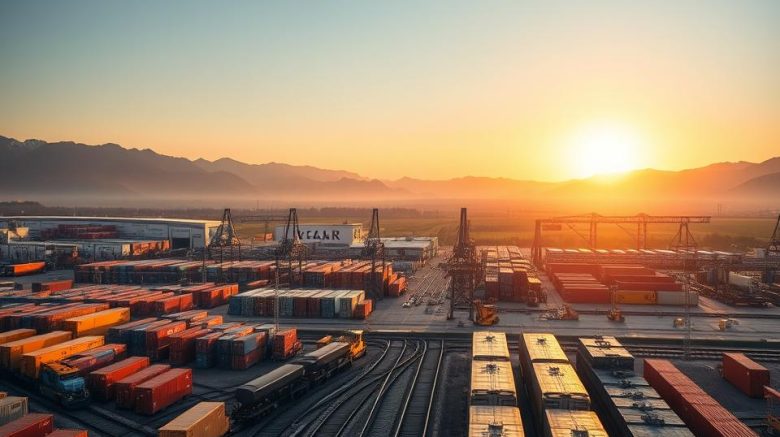
Reimagining Trade Pathways: China Europe Railway Express
In fewer than ten years, the China to Europe freight train has made countless voyages across continents. It began in 2011 and has become a game-changer in global freight. The line ties Asia’s factories to Europe’s shoppers faster than traditional routes. It forms a core part of the Belt and Road initiative, it supports steady schedules and consistent transit performance.
The China–Europe freight rail link provides an efficient channel for cross-border commerce. It enables companies to keep up with rising market demand. Such benefits are crucial in the current fast-moving global economy.
Shippers depend on rail networks for quick goods movement and cost savings. This China–Europe rail route stands out as a distinctive answer for long-distance logistics. It’s essential for China’s goal to expand trade corridors. It paves the way for consistent deliveries throughout numerous countries.
- Rail services speed up shipments between Asia and Europe
- Stable freight paths support better inventory planning for businesses
- Belt and Road objectives deepen cross-border commercial relationships
- International logistics benefit from both faster transit and lower costs
- Companies leverage a streamlined route for high-volume exports and imports
Introduction to the Expanding Global Trade Network
Globalization pushes nations and businesses to find reliable shipping paths across vast distances. This China Europe Express route stands as a central pillar of the Belt and Road strategy. It connects Asia to Western economies, enabling industries to find quicker routes and cut emissions.
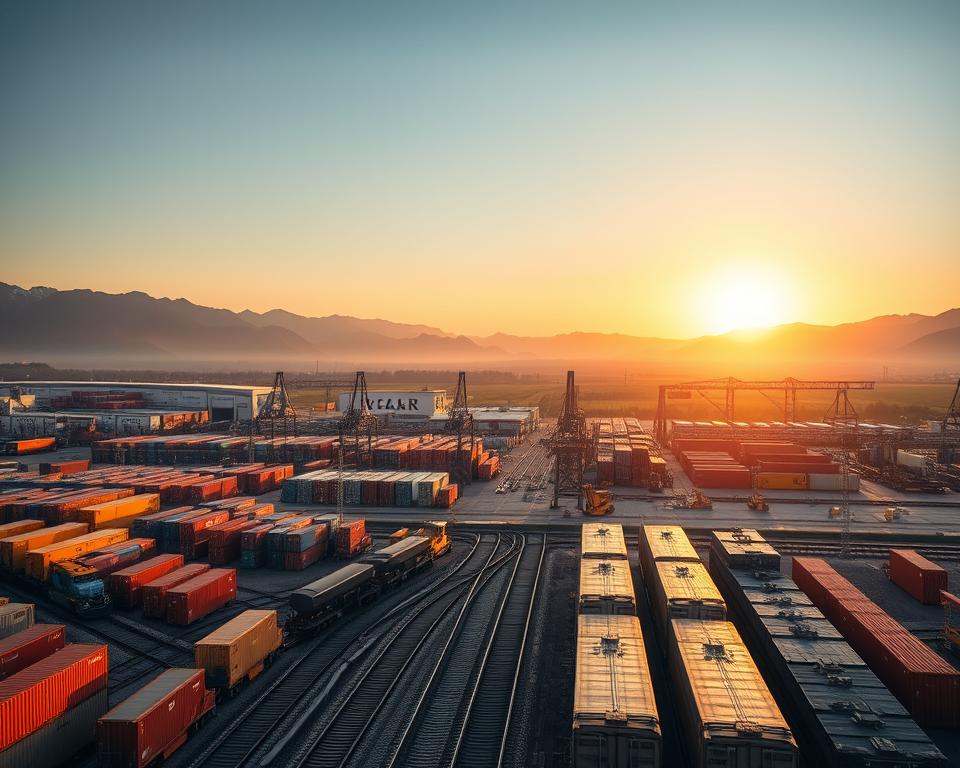
The Role of China in Cross-Border Connectivity
China is pouring substantial investment into rail systems, tightening its connections with global markets. The China–Europe Railway Express has already completed more than 100,000 journeys, transporting upwards of 11 million TEUs with a value beyond $420 billion. Such progress carves out fresh trade routes, boosting competitive shipping and sustainable growth.
Opportunities for Western Markets
Companies in Western markets benefit from this surge in global trade. They enjoy shorter transit times, stable supply chains, and lower environmental impact. The network becomes a wise solution for businesses planning to reach additional territories.
Background and Goals of the Belt and Road Initiative
The China’s BRI videos Initiative is designed to open fresh trade corridors across Asia, Europe, and beyond. It seeks to reduce transport costs while granting access to new sales regions for producers and traders. The strategy weaves together road, sea, and rail systems, stimulating infrastructure expansion and encouraging global collaboration.
The China railway express emerges as a crucial pillar of efficient cargo movement. Its priorities include funding advanced rail technology, upgrading customs procedures, and building strategic corridors. This strengthens the relationship between factories in the East and buyers in the West. It also leads to smoother shipping and boosts local economies through new business opportunities.
China Europe Railway Express: Transforming Transcontinental Logistics
The emergence of dedicated freight corridors has ushered in new horizons for global trade. Businesses now aim for quicker deliveries and enhanced connectivity across continents. This program reduces uncertain transit delays, transforming the flow of goods between Asia and Europe.
Closing the Distance for Chinese Companies
Chinese exporters find a competitive advantage in tapping into European markets. Routes such as Chongqing to Duisburg showcase how electronics, automotive parts, and other goods arrive in nearly half the time of sea transport. Because of set timetables, firms manage their deliveries more precisely and stay competitive in fast-paced sectors.
Boosting Efficiency in Cross-Border Logistics
More efficient customs operations and set timetables smooth out extended freight journeys. The shift results in shorter lead times and steadier logistics networks for businesses. Cargo owners profit from more seamless coordination using consolidation services and multimodal transfers. The China railway express to Europe emerges as a key asset, linking production centers with distribution hubs for swift commerce.
Key Advantages of the China–Europe Freight Rail Service
For businesses looking for quicker shipping, the China to Europe freight train is a viable option. It bridges the gap between the slow pace of sea voyages and the high costs of air travel. Guided by the Belt and Road vision, new corridors support the speedy shipment of products such as electronics, cars, and raw materials to European markets.
By rail, transit times of roughly 12–18 days offer a much quicker option than ocean routes. Such speed appeals to businesses that prioritize rapid delivery to satisfy customer expectations. It fosters ongoing expansion for producers focused on maintaining reliable international logistics.
Shorter Transit Times
Briefer transit periods result in speedier order fulfillment. This benefit is valuable for both small and large businesses, helping them reduce inventory replenishment wait times.
Cost-Efficient Rail Freight Solutions
Rail shipping costs roughly one-fifth of comparable air freight. It is regarded as a budget-conscious method that still safeguards product quality. Under the Belt and Road initiative, stronger partnerships and improved infrastructure are simplifying cross-continental commerce.
The Significance of China Railway Express to Europe
This China Europe Express route forms a foundation of the China Belt and Road vision. It links manufacturers in Asia with importers in Europe, becoming crucial for handling sizable consignments. It handles over 50,000 types of goods and spans 25 countries, making it a reliable choice for distributors.
For large enterprises, it delivers a quicker, more eco-conscious alternative to standard sea or air freight. It stabilizes logistics networks, supporting more accurate stock control and serving expanding customer bases. It has become an important pillar in international freight transport, easing pressure on overloaded corridors.
- Fast deliveries that improve readiness for retail demand
- Lower carbon emissions that support sustainable expansion
- Improved stock planning reliability across many industries
European businesses now see new opportunities with the China Railway Express. Its predictable routes and stable capacity open up new markets. This collaboration fortifies trade relations and shields logistics from worldwide disruptions.
Eurasian Rail Corridors and Cross-Border Growth
The Belt and Road strategy from China builds fresh pathways tying production centers to high-growth markets. This far-reaching network spans ports, highways, and inland terminals. It provides multiple routing options that shorten transit times and strengthen trade. This synergy boosts rail logistics, prompting companies to seek out quicker cargo options.
Major corridors, such as Xi’an to Hamburg and Chengdu to Lodz, extend cross-border reach for goods like electronics, textiles, and machinery. Shipments pass through coordinated networks that blend truck, barge, and train transport. This strategy lowers overall transport costs and supports greener logistics.
Key Intermodal Transportation Hubs
Places like Xi’an in China and Hamburg in Germany serve as central hubs for diverse goods. These nodes accelerate distribution, embed digital tracking, and help resolve congestion challenges.
| Hub | Location | Key Commodities | Connectivity Advantage |
|---|---|---|---|
| Xi’an | China | Electronics, Apparel | Robust East-West Links |
| Hamburg | Germany | Machinery, Automotive Parts | Port Integration |
| Chengdu | China | Textiles, Consumer Goods | Rail-Road Collaboration |
| Lodz | Poland | Various Industrial Products | Strategic EU Entry Point |
Effects on European Supply Chains
Producers gain from lower costs and quicker deliveries, enabling broad distribution across European markets. Such rail momentum supports Europe’s push toward greener logistics. It additionally creates realistic channels for continued trade development.
Ways Rail Logistics Reinforces International Trade
The China Europe Express train, a key part of the Belt and Road initiative, is revolutionizing freight options. It establishes cross-border connectivity, ensuring goods move smoothly between major markets. Large freight capacities keep goods moving regularly, aligning with increasing customer expectations.
Digital paperwork systems streamline customs processing across multiple nations. These improvements simplify customs steps and give companies smoother experiences and faster turnaround. Live tracking systems increase visibility, allowing cargo owners to follow each key movement.
- Speedier border processing thanks to accurate and protected documentation
- Reliable schedules that make inventory management more predictable
- Efficient logistics that suit the needs of tech-focused sectors
These developments strengthen cross-border links, contain costs, and help meet strict deadlines. Accessing global markets has become easier without sacrificing quality or reliability. Rail freight has become a game-changing tool for global trade, serving diverse sectors and consumer demands.
Challenges and Future Prospects in Global Trade Connectivity
New and existing rail links are expanding trade corridors, tying together distant regions. The China Europe Express train, part of the China Belt and Road initiative, is reshaping global cargo movements. Checkpoints on Eurasian corridors must coordinate more closely to minimize waiting times and cope with increased demand.
Building Infrastructure for Sustainable Expansion
Differences in track gauge require cargo transfers at locations like Alashankou, adding time to the journey. This handover calls for stronger infrastructure and better tracking systems to maintain schedules. The 95306 freight service platform improves visibility, helping reduce bottlenecks and enabling smoother transfers.
On-time infrastructure projects and upgraded corridors ignite new chances for quicker, greener logistics.
Enhanced Collaboration with Belt and Road Chinese Enterprises
International agreements foster trust between shippers and participating countries. Collaborative work targets predictable customs frameworks and modern tools to make long-distance logistics smoother. Strong partnerships with Belt and Road Chinese Enterprises improve service quality, providing more cohesive shipping experiences along eurasian rail routes.
This level of cooperation paves the way for steady progress, ensuring competitive trade advantages in the years ahead.
| Common Transport Hurdles | Potential Solutions |
|---|---|
| Varying Rail Gauges | Upgraded Transshipment Points |
| Time Delays at Borders | Digital Freight Platforms |
| Limited Cross-Border Coordination | Unified Customs Agreements |
The Importance of Transcontinental Railway Service Today
In today’s interconnected world, transcontinental rail routes are key for businesses needing reliable logistics. The China Europe Express train is part of the China Belt and Road initiative. It supports efficient cargo movement across many nations. Michael Schumann of the German Federal Association for Economic Development and Foreign Trade describes it as a vital artery of global supply chains. It boosts reliability and resilience in the global trade network, even during disruptions. Trade associations in Europe acknowledge its stable operation, despite congestion at seaports.
Building More Diverse Supply Chains
Cargo owners profit from a balanced mix of freight choices. This method reduces reliance on single transport modes. It creates additional ways for firms to service an even broader trade ecosystem. Balancing cost, transit time, and goods protection helps firms remain competitive in shifting conditions.
Managing Regulatory Requirements
Customs rules and packaging specifications can stall shipments. Clear guidelines and unified processes smooth cross-border transitions. Businesses gain confidence by working with rail operators who streamline compliance. This supports stable growth across multiple industries.
| Advantage | Outcome |
|---|---|
| Reliable Schedules | Predictable transit times boost customer satisfaction |
| Expanded Reach | Greater access for smaller exporters and importers |
Digital and Technological Progress in Rail Freight
Digital breakthroughs are opening new avenues for global trade. This China Europe Express service under the Belt and Road framework demonstrates how modern tools can transform logistics. It increases efficiency across long-distance routes. Using automated inspection tools at borders raises precision and shortens delays.
Modern scheduling algorithms likewise have an important impact. They help minimize congestion on busy routes, keeping shipments moving smoothly. These advancements highlight the importance of a future-ready system for timely deliveries.
Modern transcontinental railway service leverages digital platforms like 95306. These tools provide real-time container tracking and more efficient customs pre-clearance. Shippers can track their cargo and adjust plans if delays occur. These upgrades emphasize the need for a system that supports timely, predictable deliveries.
- Electronic customs workflows enabling faster entry
- Automated border checks to minimize bottlenecks
- Smart scheduling tools that optimize train routing
This style of transcontinental railway service transforms traditional shipping methods. It strengthens confidence in a system engineered for expansion and durability. International traders gain from broader connectivity and ongoing innovation.
Final Thoughts
The China-Europe Railway Express, a key part of the Belt and Road Initiative, has seen over 100,000 trips. It has transported goods worth more than $420 billion. This line ties together key markets, advances eco-friendly logistics, and helps guarantee safe, on-time arrivals.
It serves as a strategic bridge between Asia and Europe. Through its links between critical trade centers, it provides efficient forwarding services and reinforces multimodal transport. Businesses benefit from reduced transit times and lower costs.
Contemporary infrastructure combined with harmonized procedures raises reliability. This makes the route a trusted choice for cross-border shipping. Strong partnerships across continents suggest further growth is on the horizon.
Innovative technology and consistent upgrades are driving new possibilities in commerce. The rail network continues to serve as a strong framework for expanding trade. It is helping shape an era of steady progress and stronger global ties.